First Touch '26
October 22, 2025 — Newsletter #9
A fan of Kickback Soccer Media? Share Kickback’s Newsletters with a soccer-loving friend or family member, or register yourself at kickbacksoccer.com.
Remembering a Random World Cup Legend:
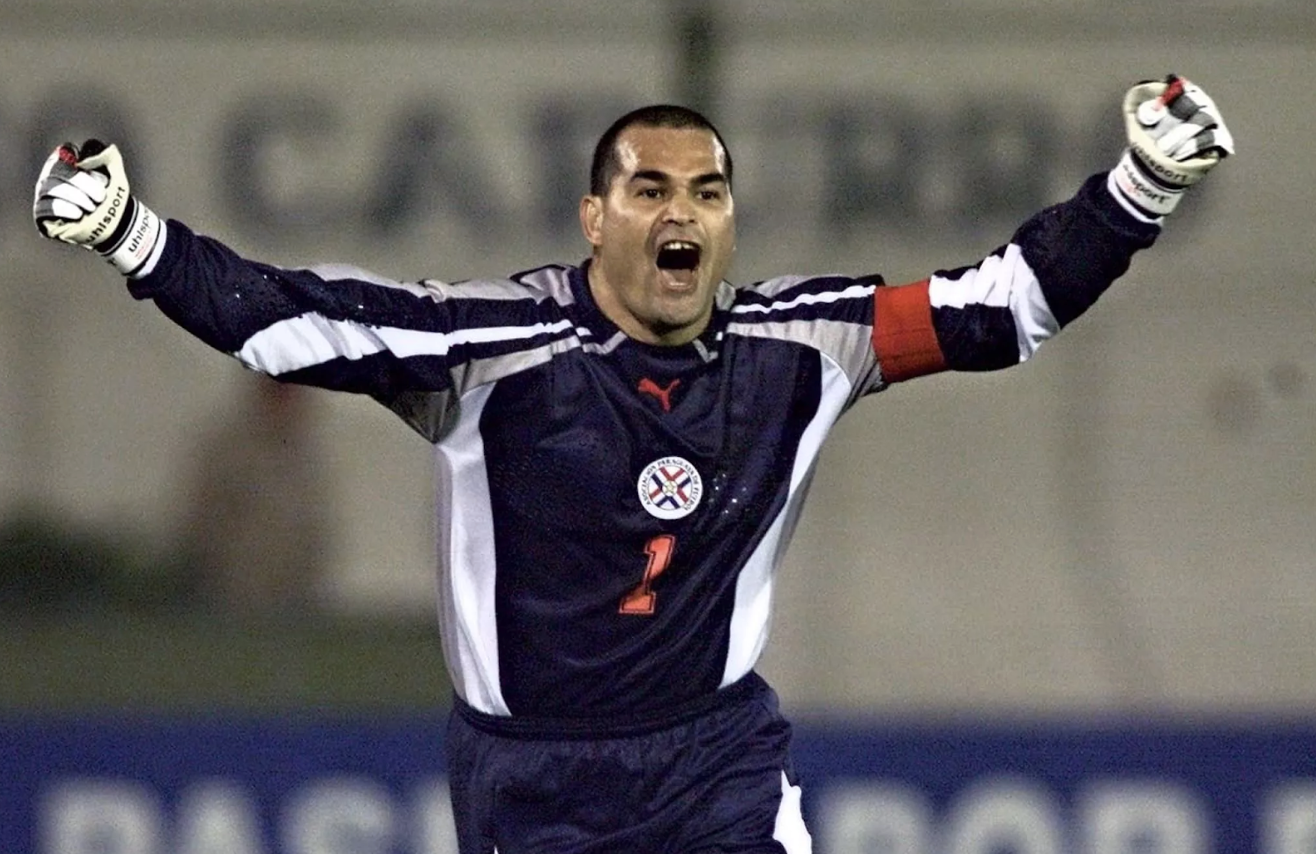
The first ever goalie to take a direct free kick at a World Cup, Paraguay’s Jose Luis Chilavert!
Headlines From the Pitch:
Morocco stunned six-time U20 Men’s World Cup winner Argentina to capture its first ever World Cup at any level. Having previously dispatched the U.S. and France with resolute defending and clinical counter-attacking, the Moroccans quickly flustered their Argentine opposition and now will celebrate the continued ascent of the nation on the global soccer stage.
Sweden made a stunning move this week, hiring former Chelsea manager Graham Potter to try to rescue their World Cup bid. Sweden have been a constant presence at the World Cup, but likely face a World Cup Playoff for qualification. Potter’s stint at Sweden is unlikely to last beyond that playoff if the Swedes don’t prevail.
The U.S. announced the roster for their next World Cup opportunity, the U.S. U17 World Cup. The roster assuredly features the most top end talent the U.S. has ever fielded at the World Cup, with heralded prospects like Cavan Sullivan, Julian Hall, Mathis Albert, Nimfasha Berchimas, Maximo Carrizo, Jude Terry, and Christopher Cupps all suiting up.
Headlines From Off the Pitch:
The announcement by U.S. Soccer of its joint regional bid for the 2031 Women’s World Cup with Costa Rica, Jamaica, and Mexico is a landmark moment for soccer in the country. The bid is uncontested, and assuredly will be approved at the next FIFA conference in April 2026.
Besides being a moment for the U.S. to solidify its role at the vanguard of women’s soccer, the 2031 bid would see the Women’s tournament expand to match the men’s at 48 nations participating, and anticipates a record setting 4.5 million tickets sold.
The highly anticipated bid puts a bookend on a special half-decade of soccer in the U.S., starting with the men’s World Cup in 2026, continuing with Los Angeles Olympics in 2028, and now concluding in 2031 with the Women’s World Cup.
World Cup Tickets Update:
Each week First Touch ‘26 will provide an update on the best way to purchase tickets to the 2026 World Cup.
FIFA announced over one million tickets of the seven million allotted have been sold, but with many being allotted for partners and Federations, the amount remaining for general sale is unknown.
Up next, the second of four phases of the ticket selling process, with a new lottery opening October 27th for fans.
With dynamic pricing in place, prices are likely to be higher than they were at the beginning of the Visa Presale Lottery. However, there are no obligations associated with the lottery, so you may as well sign-up!
Newsletter Halftime: Let's Do Some World Cup Trivia!
Ever wonder about how soccer got big in Japan? After qualifying for the first time in 1998, Japan has increasingly become relevant as a soccer power on both the women’s and men’s side.
Well, part of it has to do with a manga, Captain Tsubasa. Introduced in the 80’s, Captain Tsubasa sold more than 90 million copies during its run and has inspired shows, video games, and more. Featuring an 11-year-old who dreams of winning the World Cup with Japan, the manga has inspired countless Japanese players.
Its influence doesn’t stop in Japan though, especially impacting Spanish players, and even counting Lionel Messi amongst his fans.
A Thing We're Excited About:
The first two U.S. group stage matches are on Friday! No worries about calling out of work the next day, or navigating midweek obligations.
Well, call out of work for each Friday and make sure you have plenty of time to properly prepare!
Level Up:
Each week Kickback approves the leveling up of a player who has taken that crucial leap with their game.
It’s a special edition of Level Up this week, as we eschew our normal structure of selecting a player in lieu of awarding the distinction to an entire nation. Morocco, you’re leveling up.
The first ever African or Arabic nation to reach a men’s World Cup semi-final, Morocco has spent the decade celebrating transformational win after transformational win. How did we get here?
- Morocco hadn’t reached a knockout round since the 80’s, and didn’t qualify for a World Cup 1998 - 2018.
- A shift approximately a decade ago saw investment flood into investment in youth training facilities, professional clubs, and the Federation.
- Morocco began finding success recruiting from their diaspora, securing soon-to-be global names like Hakim Ziyech and Achraf Hakimi.
- Investment in infrastructure and the associated ambition supported the securing of the 2025 African Cup of Nations, three U17 Women’s World Cups in-a-row, and the crown jewel, co-hosting the 2030 World Cup.
- The continued success has been parlayed into further success in recruiting (e.g., Brahim Diaz and Eliesse Ben Seghir) and unprecedented success at the youth levels (winning the U20 Men’s World Cup).
Morocco has seemingly arrived as the first consistent world power in soccer from Africa, and its aspirations clearly seem to be much grander.
Their next big swing? Morocco is building the largest stadium in the world, the 115,000 seater Grande Stade Hassan II, in anticipation of the 2030 World Cup.

Spend your points wisely, Morocco.
Qualified Teams (so far):
Here are the countries who have booked their spot at the final tournament, so far!
U.S.A, Canada, Mexico, Argentina, Brazil, Ecuador, Japan, Iran, South Korea, Uzbekistan, Jordan, Australia, New Zealand, Colombia, Uruguay, Paraguay, Morocco, Tunisia, Cape Verde, Ghana, South Africa, Senegal, Ivory Coast, Algeria, Egypt, England, Qatar, Saudi Arabia